
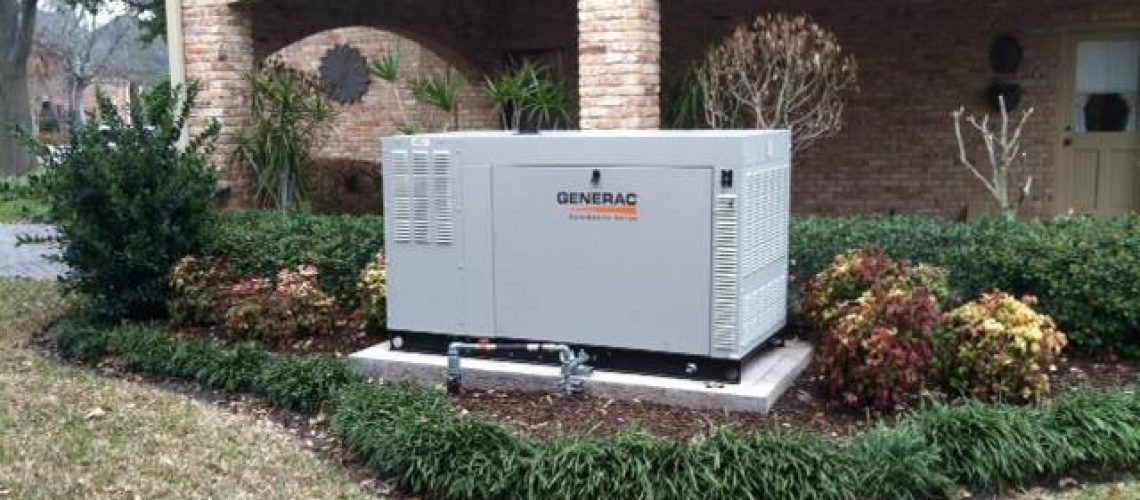
Generator battery problems are one of the most common reasons a standby generator fails to start when the power goes out.
Your generator may sit quietly for weeks, then need to start automatically during a storm, outage, or electrical failure. If the battery is weak, dead, corroded, loose, or not charging properly, the generator may not start at all.
The good news is that many battery issues can be found during routine generator maintenance before they become an emergency.
Why Generator Battery Problems Matter
A home standby generator uses a battery to start the engine.
The battery does not power your whole house. It helps start the generator so the engine can begin producing backup power.
If the battery fails, your generator may not turn on, even if the fuel supply, engine, and transfer switch are working properly.
That is why battery health is an important part of standby generator maintenance.
During an outage, your generator may need to support your refrigerator, lights, Wi-Fi, security system, medical devices, air conditioning, or other essential systems. A weak battery can stop that backup power from starting when you need it most.
Common Signs of Generator Battery Problems
Generator battery issues do not always happen suddenly. Many generators show warning signs before the battery fails completely.
Common signs include:
- The generator cranks slowly.
- The generator clicks but does not start.
- The control panel shows a battery warning.
- The generator fails its weekly exercise cycle.
- The generator starts sometimes but not consistently.
- The battery terminals look corroded.
- The battery is swollen, leaking, or damaged.
- The generator shuts down unexpectedly.
- The battery keeps dying after replacement.
If you notice any of these signs, schedule generator service before the next outage.
Why Your Standby Generator Battery Keeps Dying
A generator battery can die for several reasons.
Sometimes the battery is simply old. Other times, the issue is connected to charging, wiring, corrosion, or another electrical problem.
Here are the most common causes.
Old or Weak Battery
Standby generator batteries do not last forever.
Many home standby generator batteries need replacement every few years, depending on the generator model, battery type, weather exposure, maintenance history, and usage.
Heat can also shorten battery life and make an already weak battery fail sooner.
If your generator battery is several years old, it should be tested during maintenance. Waiting until it fails during an outage is risky.
Corroded Battery Terminals
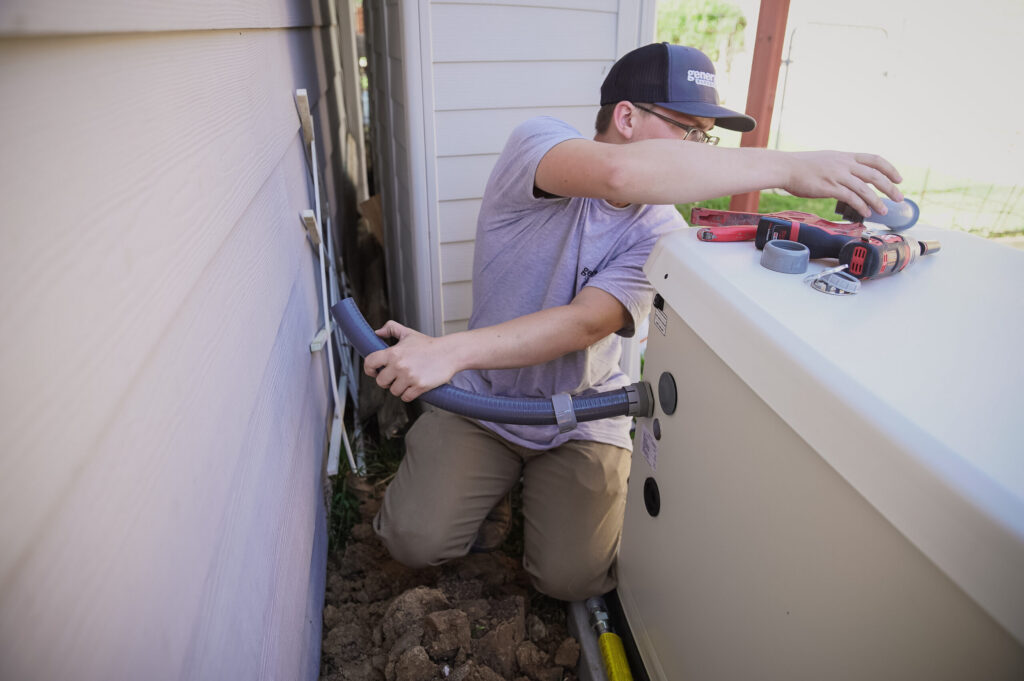
Corrosion can prevent the battery from sending power properly.
You may see white, blue, or green buildup around the terminals or cable connections. Even a small amount of corrosion can interfere with starting.
Corrosion is more likely when the battery is exposed to moisture, humidity, or poor connections.
A technician can safely inspect the battery terminals, clean connections when appropriate, and check whether the battery or cables need replacement.
Loose Battery Connections
A generator battery may still be good, but loose connections can stop it from working correctly.
Loose battery cables can cause:
- Slow cranking
- Intermittent starting
- Warning codes
- Charging issues
- Sudden generator failure
This is why battery testing should include more than checking the battery itself. The cables, terminals, and connections also need to be inspected.
Battery Charger Problems
Your standby generator needs a way to keep the battery charged while the unit is not running.
If the charger is not working correctly, the battery may slowly drain until it no longer has enough power to start the generator.
A charging problem can make a new battery fail sooner than expected.
This is one reason homeowners should avoid replacing the battery repeatedly without diagnosing the system. If the charger, wiring, or control board is the real issue, the new battery may keep dying.
Failed Exercise Cycle
Many standby generators run a scheduled exercise cycle.
This short test helps keep the system active and allows the generator to check basic operation. If the generator misses this cycle or fails during exercise, the battery may be weak or there may be another system issue.
Homeowners should pay attention if the generator sounds different, struggles to start, or does not run its usual test cycle.
A missed exercise cycle is easy to overlook, but it can be an early sign that the generator is not ready for a real outage.
Weather Exposure and Battery Wear
Outdoor standby generators are exposed to changing weather throughout the year.
Heat, humidity, rain, and debris can affect battery health and electrical connections over time. These conditions may also contribute to corrosion or shorten battery life.
That is why generator battery maintenance should be part of your regular generator service plan.
A battery that looks fine from the outside may still be weak when tested under load.
Control Panel or Sensor Issues
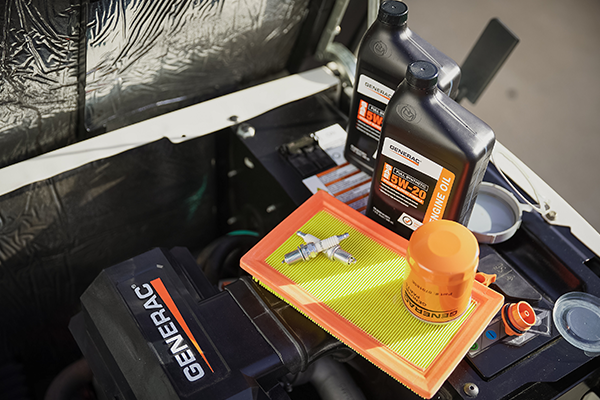
Sometimes the battery is not the only problem.
A generator may show a battery warning because of a charger issue, wiring issue, sensor fault, controller problem, or poor connection.
If your generator shows repeated battery-related alerts, do not assume the battery is the only part that needs attention.
A qualified generator technician can test the battery, charger, connections, voltage, controller, and related components.
Can a Generator Run With a Bad Battery?
A standby generator may continue running after it starts, but a bad battery can stop it from starting in the first place.
That is the main risk.
If your generator cannot crank, it cannot begin producing backup power. During an outage, that means your home may stay without backup power even though you have a standby generator installed.
A weak battery can also cause unreliable starts. It may work during a short test but fail when a real outage happens.
That is why battery testing should be part of routine generator maintenance.
What to Check Before Storm Season
Before storm season, homeowners should make sure their generator battery is ready.
A professional maintenance visit may include:
- Battery age review
- Battery voltage testing
- Load testing
- Terminal inspection
- Cable and connection checks
- Charger inspection
- Control panel review
- Error code check
- Exercise cycle testing
- Full generator inspection
This helps identify small issues before storms arrive.
Do not wait until severe weather is already in the forecast. Generator service appointments can become harder to schedule when many homeowners are preparing at the same time.
Should You Replace a Generator Battery Yourself?
Some homeowners may be comfortable replacing small batteries, but a home standby generator is not just a basic appliance.
It is connected to your home’s electrical system, fuel supply, transfer switch, control panel, charger, and safety features.
Replacing the battery without checking the rest of the system can leave the real problem unresolved.
For example, if the battery keeps dying because of a charger issue, a new battery may only be a temporary fix.
If you are not fully sure what the issue is, schedule professional generator service.
How Routine Maintenance Helps Prevent Battery Failure
Routine maintenance is the best way to reduce surprise battery problems.
During a maintenance visit, a technician can check the battery, inspect terminals, test the charging system, review warning codes, and confirm whether the generator is completing its exercise cycles.
Maintenance also helps catch other problems that can affect reliability, including oil issues, airflow problems, fuel concerns, pests, debris, corrosion, and worn parts.
For homeowners, this is not just about convenience. It is about being prepared for outages and long periods without utility power.
When to Call a Generator Professional
Call a generator professional if:
- Your generator will not start.
- The battery keeps dying.
- The control panel shows battery warnings.
- The generator clicks but does not crank.
- The battery terminals are corroded.
- The generator failed its exercise cycle.
- The battery is leaking, swollen, or damaged.
- The generator has not been serviced recently.
- You are preparing for storm season.
Do not keep trying to restart a generator if it shows repeated warning codes. Repeated failed starts may point to a larger issue that needs proper testing.
Final Thoughts
Generator battery problems can stop a standby generator from starting when your home needs backup power most.
A weak battery, loose cable, corroded terminal, failed charger, or missed maintenance visit can all create trouble during an outage.
Battery maintenance should be part of your regular generator care plan, especially before storm season. Heat, humidity, storms, and extended outages can put extra pressure on your generator system.
If your generator battery is old, unreliable, or showing warning signs, contact Generator Supercenter of Broward. Our team can help with generator maintenance, repair support, and standby generator service so your system is ready before the next outage.
FAQs
What causes generator battery problems?
Common causes include an old battery, loose connections, corroded terminals, charger failure, missed maintenance, heat exposure, and control panel issues.
How long does a standby generator battery last?
Many standby generator batteries last a few years, but lifespan depends on the model, battery type, weather, maintenance, and usage. Have it tested regularly.
Why does my generator click but not start?
A clicking sound often points to a weak battery, loose connection, corroded terminal, or starter-related issue. A technician can test the system to confirm the cause.
Can a bad battery stop my standby generator from working?
Yes. If the battery cannot start the engine, the generator may not turn on during an outage.
Should I service my generator battery before storm season?
Yes. Homeowners should have the battery, charger, terminals, control panel, and full generator system checked before storm season.