

A generator for a large home should be selected based on the home’s power needs, major appliances, fuel supply, electrical setup, and backup priorities. Larger homes often have more systems to support, so the right generator is not always based on square footage alone.
Before choosing a standby generator, homeowners should think about what they want powered during an outage. A qualified generator professional can confirm what size and setup apply to your home.
Why Large Homes Need Careful Planning
Large homes often have more electrical demand than smaller homes. They may have multiple air conditioning units, large refrigerators, pool equipment, well pumps, electric water heaters, smart home systems, security systems, home offices, and other high-use appliances.
Because of this, a generator for a large home should be planned carefully. The goal is to choose a system that can support important loads without being oversized or undersized for the property.
If you are still comparing backup power options, this guide on types of home generators can help explain the difference between standby, portable, and inverter generators.
Start With What You Want to Power
The first step is deciding what you want your generator to support during an outage. Some homeowners want essential backup only, while others want whole-home comfort.
Common items may include:
- Air conditioning
- Refrigerator and freezer
- Lights
- Internet and Wi-Fi
- Security system
- Garage door opener
- Medical equipment
- Kitchen appliances
- Water heater
- Pool equipment
- Home office equipment
- Washer and dryer
Not every home needs every system running at the same time. A professional can help review which loads are essential and which ones can be managed.
Think Beyond Square Footage
Square footage can help estimate generator needs, but it is not enough on its own. Two homes of the same size can have very different electrical demands.
For example, one large home may use gas appliances and have one air conditioning unit. Another may have electric heat, multiple HVAC systems, a pool pump, and an electric vehicle charger.
Generac’s standby generator sizing tool shows that home size, heating type, and EV charging needs can all affect generator recommendations.
Consider Your Largest Loads
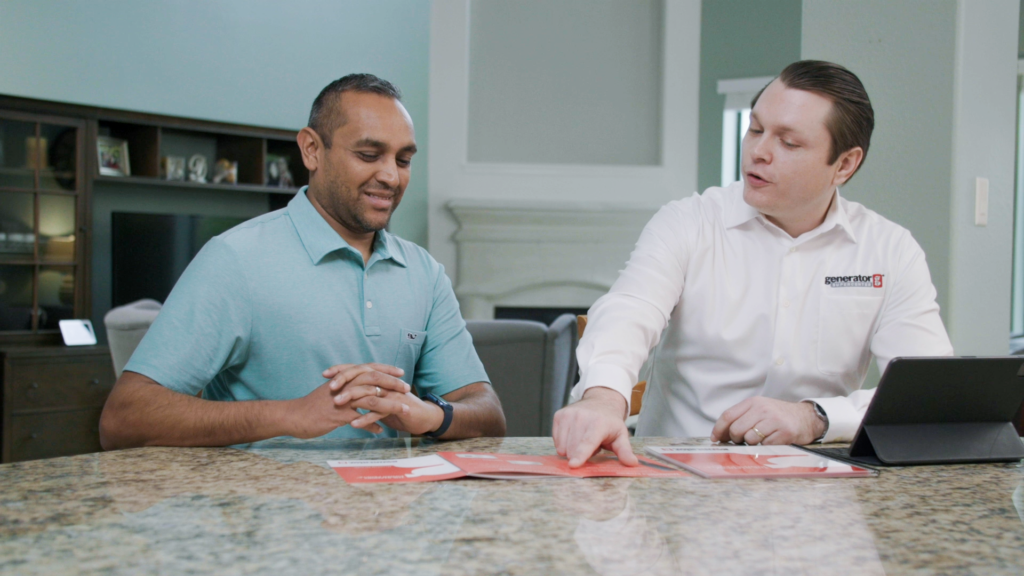
Large appliances and motor-driven systems can require more power when they start up. This is called starting load or surge demand.
Examples may include:
- Central air conditioning
- Well pumps
- Pool pumps
- Refrigerators
- Freezers
- Large electric appliances
- Sump pumps
- Electric water heaters
A generator must be able to handle both running power and startup demand. Depending on the model and installation design, load management may help control which systems run at the same time.
Understand Load Management
Load management helps prioritize which systems receive power during an outage. This can be useful for larger homes because it may reduce the need for an unnecessarily large generator.
For example, a load management setup may allow the generator to power major systems in a controlled order instead of allowing every large appliance to start at once.
This can help support comfort while protecting the generator from being overloaded. The exact setup depends on the generator model, electrical panel, transfer switch, and home layout.
Check Fuel Supply
A generator for a large home usually needs a dependable fuel supply. Many standby generators run on natural gas or propane, but the right option depends on what is available at the property.
Fuel planning may include:
- Natural gas availability
- Propane tank size
- Gas pressure
- Gas line capacity
- Distance from the fuel source
- Local installation requirements
Generator Supercenter of Broward’s whole home generator FAQs note that Generac whole-home generators can be fueled by either natural gas or propane.
Fuel requirements can vary by model and installation setup, so a qualified professional should confirm what your home needs.
Review Your Electrical Panel
Large homes may have complex electrical systems. Some may have multiple panels, subpanels, larger service capacity, pool equipment circuits, detached structures, or outdoor living areas.
A generator professional will usually review your electrical panel before recommending a system. This helps determine how the generator will connect to the home and which circuits or systems should be supported.
If the home has been renovated or expanded, the existing panel setup should be checked carefully.
Decide Between Essential Backup and Whole-Home Backup
Not every large home needs full whole-home backup. Some homeowners only want the essentials, while others want their home to feel close to normal during an outage.
Essential Backup
Essential backup focuses on must-have systems, such as refrigeration, lights, internet, medical equipment, and select outlets.
This may be a more practical option if the home has very high electrical demand or if the homeowner wants a more controlled setup.
Whole-Home Backup
Whole-home backup is designed to support more of the house, depending on the generator size and load management setup.
For larger homes, whole-home backup may require a more detailed review of HVAC systems, appliances, fuel supply, and electrical capacity.
You can explore available whole home generators to better understand what standby generator options may be available.
Plan for Location and Clearance
A larger standby generator may need more space than a smaller unit. Placement should consider clearance, airflow, exhaust, service access, fuel line routing, property lines, windows, doors, and local code requirements.
The unit should not be placed where exhaust can enter the home or where airflow is blocked by walls, fences, plants, or stored items.
Local code requirements may vary, and a qualified professional can confirm what applies to your home.
Do Not Guess the Size
Guessing generator size can create problems. A generator that is too small may overload or fail to support important systems. A generator that is too large may cost more than necessary and may not be the best match for the home’s actual needs.
Professional standby generator installation includes reviewing the home’s power needs, placement, fuel supply, transfer switch requirements, and permitting considerations.
Maintenance Still Matters for Large Homes
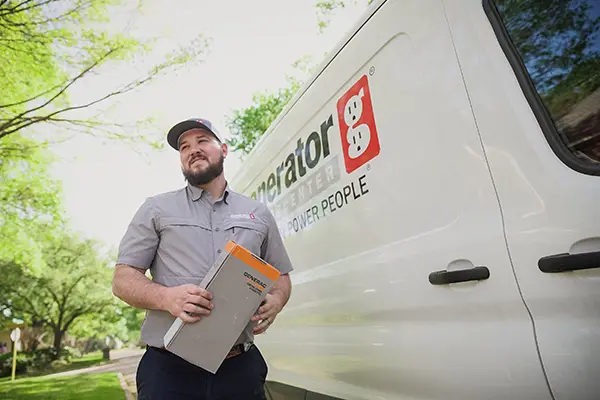
A generator for a large home may support more equipment during an outage, so routine care is important. Maintenance helps check the battery, oil, filters, connections, controller, enclosure, and overall condition of the system.
If a large home relies heavily on backup power, the generator should be kept ready before an outage occurs. Regular generator maintenance can help reduce the risk of startup issues when the system is needed.
When to Call a Professional
You should contact a generator professional before choosing a generator for a large home. A professional can review your electrical demand, fuel supply, load priorities, location options, and installation requirements.
Professional help is especially important if:
- The home has multiple air conditioning units
- The home has a pool, well pump, or large appliances
- You want whole-home backup
- You have multiple electrical panels
- You use propane and need tank sizing guidance
- You have an electric vehicle charger
- You are unsure which loads matter most
- You want automatic backup power
For help reviewing options, schedule standby generator service or speak with a generator professional before making a final decision.
Final Thoughts
Choosing a generator for a large home starts with understanding what your home actually needs during an outage. Square footage matters, but appliances, HVAC systems, fuel supply, electrical setup, and load priorities are just as important.
A properly planned standby generator can help keep essential systems running and improve comfort during outages. For help choosing the right system for your home, contact Generator Supercenter of Broward for professional guidance.
FAQs
What size generator do I need for a large home?
The right size depends on your appliances, HVAC systems, fuel supply, electrical panel, and what you want powered during an outage. A professional load review is the safest way to confirm the correct size.
Can one generator power a large house?
Yes, one standby generator may be able to power a large house, depending on the home’s electrical demand and the generator setup. Load management may be needed for some homes.
Is square footage enough to choose a generator?
No. Square footage is only one part of generator planning. Appliances, air conditioning, fuel type, and starting loads can change what size generator is needed.
Is natural gas or propane better for a large home generator?
Both may work, depending on what is available at the property. Natural gas may be convenient where service is available, while propane requires proper tank sizing and fuel planning.
Do large homes need load management?
Many large homes can benefit from load management because it helps control which systems run at the same time. This may reduce overload risk and improve generator performance.