
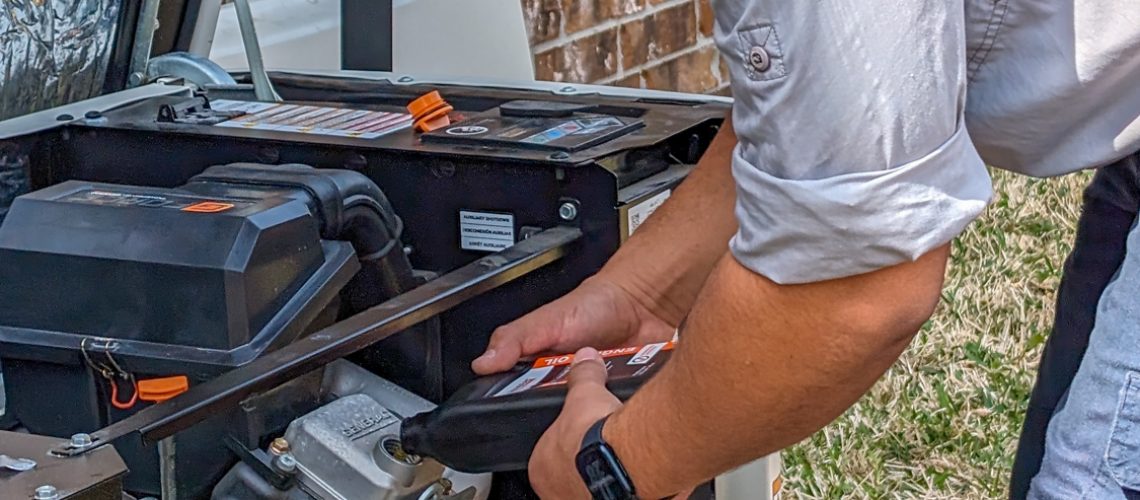
The simple answer is no. Never refuel a generator while running. Always shut it off and let it cool; spilled gasoline on hot parts can ignite.
Why Refueling a Running Generator Is Dangerous
A running generator gets hot enough to ignite spilled fuel, so always let it cool before refueling. Refueling while running increases these dangers during stressful outages.
What You Should Do Instead

If your generator is getting low on fuel, follow a safer routine:
1. Turn the generator off
Never top off while running. Always shut down first.
2. Let it cool down
Give it time before opening the fuel cap. FEMA says to allow it to cool for around 15 to 20 minutes before refueling.
3. Refuel outdoors
Add fuel in a well-ventilated outdoor area, away from sparks, open flames, and smoking. Generator manuals also warn against refueling in enclosed spaces.
4. Clean up any spilled fuel
If fuel spills, wipe it up before restarting the generator. Do not restart until the area is dry and safe.
5. Restart only when everything is secure
Once the cap is tight and there is no fuel left in the machine, you can restart it according to the manufacturer’s instructions.
Does This Apply To a Standby Generator?
A home standby generator is different. Many standby units run on natural gas or liquid propane from an existing supply line or tank, so manual refueling is usually not part of normal use.
Generac’s home standby guidance, for example, notes that refueling is not necessary because the system runs on the home’s existing natural gas or LP fuel supply.
So if asked whether you can refuel a running generator, the answer is:
Extra Safety Tips During a Power Outage
- Keep your standby generator properly maintained so it is ready when an outage happens.
- Schedule routine inspections and service to check fuel supply, battery condition, and overall performance.
- Make sure the area around the generator stays clear of debris, plants, and clutter.
- Never store flammable materials too close to the unit.
- Watch for any signs of trouble, such as warning lights, unusual noises, or startup issues.
- Call a professional installer for setup and electrical connection.
- Test the system regularly to confirm it starts and runs as expected.
- Check that your generator has a reliable fuel source, whether it runs on natural gas or propane.
- Follow the manufacturer’s maintenance and safety guidelines at all times.
Final Thoughts
If considering refueling a running generator, do not risk it. Turn it off. Let it cool. Then add fuel safely.
That extra wait can help prevent burns, fire, and damage to your equipment. It is a small step, but it can make a big difference when the power is out and the pressure is on.
Looking for a safer and more convenient backup power setup? Explore our whole house generator solutions to find a system that keeps your home protected without the hassle of manual refueling.