
Surge protectors help protect your home’s electronics, appliances, and electrical system from sudden voltage spikes. If you have a standby generator or are planning to install one, surge protection can be an important part of a safer and more reliable backup power setup.
A surge protector does not stop every electrical problem, but it can reduce the risk of damage from certain power surges. For homeowners with expensive appliances, smart devices, HVAC equipment, and home office setups, this added layer of protection is worth understanding.
What Is a Surge Protector?
A surge protector is a device designed to help limit excess voltage before it damages connected equipment. Power surges can happen because of lightning, utility grid changes, equipment cycling, wiring issues, or power returning after an outage.
Small plug-in surge protectors are commonly used for computers, TVs, and office equipment. Whole-home surge protectors are installed at or near the electrical panel to help protect more of the home’s electrical system.
The Electrical Safety Foundation International explains that home surge protective devices are designed to help protect electronics from power surges and support safer electrical performance.
Why Surge Protection Matters
Modern homes depend on sensitive electronics. Even basic appliances now often include circuit boards, control panels, sensors, and digital displays.
Power surges may affect:
- Televisions
- Computers
- Wi-Fi routers
- Smart home devices
- Refrigerators
- Washers and dryers
- HVAC equipment
- Garage door openers
- Security systems
- Generator controls and related equipment
A major surge may cause immediate failure, while smaller repeated surges may shorten the life of electronics over time.
Surge Protectors and Standby Generators
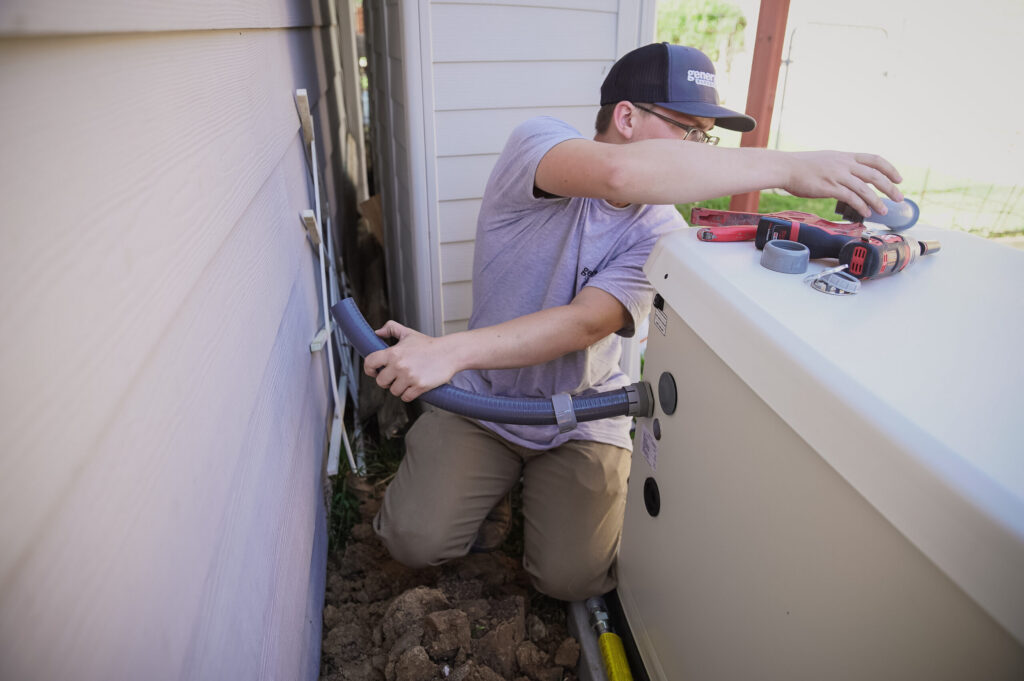
A standby generator is designed to provide backup power when utility power is interrupted. However, a generator does not remove the need for proper electrical protection.
When a generator starts, transfers power, or returns to utility power, your home’s electrical system still needs to be set up correctly. Surge protection may help reduce the risk of voltage spikes affecting sensitive equipment during changing power conditions.
If you are still learning how standby systems work, this guide on what is a home standby generator explains the basic role of a permanently installed backup generator.
Whole-Home Surge Protectors vs Plug-In Surge Strips
Not all surge protectors provide the same level of protection.
Plug-In Surge Strips
Plug-in surge strips protect devices connected directly to that strip. They are commonly used for electronics such as TVs, computers, gaming systems, and office equipment.
However, a plug-in strip only protects what is connected to it. It does not protect the entire electrical panel or major hardwired appliances.
Whole-Home Surge Protectors
A whole-home surge protector is installed at the electrical panel or service equipment. It is designed to help protect the home’s electrical system from larger surges before they reach connected circuits.
The National Electrical Manufacturers Association explains that surge protective devices are commonly classified by installation type, including devices installed near service equipment and devices used closer to protected equipment. Their surge protective device guidance can help homeowners understand why product type and installation location matter.
For many homes, the strongest approach may involve both whole-home surge protection and point-of-use protection for sensitive electronics.
Where Surge Protection Fits in a Generator Setup
Surge protection should be considered alongside the full generator installation plan. This includes the generator, transfer switch, electrical panel, grounding, fuel supply, and load priorities.
A transfer switch is especially important because it safely manages the connection between utility power and generator power. If you want to better understand this part of the system, this guide on generators and transfer switches explains why transfer switches matter.
Surge protection should not be treated as a replacement for correct installation. It works best as part of a properly designed electrical system.
Can Surge Protectors Protect Against Lightning?
Surge protectors may help reduce damage from some surge events, but they cannot guarantee full protection from a direct lightning strike. Lightning can create extremely powerful electrical energy that may overwhelm protection devices.
That does not mean surge protection is useless. It simply means homeowners should understand its limits.
A whole-home surge protector can be one part of a broader protection strategy, especially in areas where storms and utility interruptions are common.
Signs You May Need Surge Protection
You may want to ask about surge protection if:
- You have many smart home devices
- You use a home office setup
- Your home has expensive appliances
- You recently installed a standby generator
- You experience frequent outages or flickering lights
- You have HVAC equipment with digital controls
- You want added protection for electronics
- Your electrical panel is being upgraded
If you are already planning a generator project, this standby generator installation complete guide can help explain how the installation process works and why electrical planning matters.
Do Surge Protectors Need Maintenance?
Surge protectors do not last forever. After absorbing surge events over time, they may lose effectiveness or need replacement.
Some whole-home surge protectors have indicator lights that show whether the device is still functioning. If the light is off, red, or showing a fault, the device should be checked by a qualified electrician or generator professional.
Plug-in surge strips should also be replaced if they are damaged, overheated, outdated, or no longer showing a protection indicator.
When to Call a Professional

You should contact a professional if you are installing a whole-home surge protector, adding surge protection to a generator system, upgrading your electrical panel, or seeing warning signs from existing protection equipment.
Professional help is especially important if:
- You are not sure whether your home already has surge protection
- You want protection for a standby generator system
- Your panel has limited space
- You see burn marks, buzzing, or damaged outlets
- Your surge protector indicator light shows a fault
- You are planning a new backup power installation
A qualified professional can confirm what applies to your home, electrical panel, generator model, and local code requirements.
Final Thoughts
Surge protectors can help reduce the risk of damage to home electronics, appliances, and generator-related electrical components. They are not a guarantee against every surge, but they can provide valuable added protection when properly selected and installed.
If you are planning a standby generator or want to improve your home’s backup power setup, contact Generator Supercenter of Broward for professional guidance.
FAQs
Do I still need surge protectors if I have a standby generator?
Yes, surge protection can still be useful with a standby generator. A generator provides backup power, while surge protectors help reduce damage from certain voltage spikes.
Is a whole-home surge protector better than a power strip?
A whole-home surge protector helps protect more of the electrical system, while a plug-in surge strip only protects devices connected to it. Many homes use both for layered protection.
Can a surge protector protect my generator?
It may help protect some generator-related parts from voltage spikes, but it does not guarantee full protection.
How long do surge protectors last?
Surge protectors wear out over time, especially after power surges. If the warning light is off or shows a fault, have it checked or replaced.
Should I add surge protection with a new generator?
Yes, it is a good idea to ask about surge protection during generator installation. A professional can confirm what works best for your home.