

A whole house generator can be a smart investment for backup power, especially in places where outages are common. But one question comes up again and again: is a whole house generator tax deductible?
For most homeowners, the answer is usually no under federal tax rules. A standard whole house standby generator for personal residential use generally does not qualify for federal home energy tax credits, and it is usually not deductible as an ordinary personal home expense.
That does not mean the answer is always no in every situation. Narrow exceptions may still be worth discussing with a CPA, especially when the installation is tied to medical care, a qualifying home office under IRS rules, or a different backup setup built around solar or battery storage rather than a traditional gas or propane standby generator.
Why Most Whole House Generators Are Not Tax Deductible
Many homeowners install a generator for peace of mind, storm preparation, food protection, comfort, and keeping the home functional during an outage. Those are all valid reasons to buy one. They just do not usually create a federal tax break by themselves.
Federal residential energy credits have applied to specific qualifying improvements and clean-energy property, not to standard standby generators. So if the generator is being installed simply to keep the lights on during outages, it is usually not tax deductible as a personal home improvement.
When a Whole House Generator Might Qualify

There are a few limited situations where the answer may be different.
Medical Necessity
This is one of the few areas where a generator may be worth reviewing with a tax professional. Medical expense rules can allow certain home improvements or equipment when the main purpose is medical care for you, your spouse, or your dependent.
For example, if a generator was installed mainly to support medically necessary equipment during outages, there may be a tax conversation to have. But it is not automatic. The facts, documentation, and medical purpose all matter. The amount that may qualify can also be limited, especially if the installation increases the value of the home.
Qualified Business Use
This area needs care because it is easy to overstate. Working from home does not automatically make a generator deductible.
Home office rules are stricter than that. Part of the home generally must be used exclusively and regularly for business. Even then, a generator is not automatically treated as a standard write-off. In some cases, a CPA may need to look at whether part of the cost should be treated as a business expense or handled as a capital cost over time.
So while business use may open the door to a discussion, it should not be presented as a guaranteed deduction.
Clean-Energy Backup Systems
Sometimes people use the phrase “whole house backup” when they are really talking about solar panels and battery storage instead of a traditional standby generator. That is a different category.
A solar-plus-battery setup may fall under different tax rules than a gas or propane standby generator. That is why it is important to separate clean-energy backup systems from standard whole house generators when discussing tax treatment.
What Homeowners Often Get Wrong
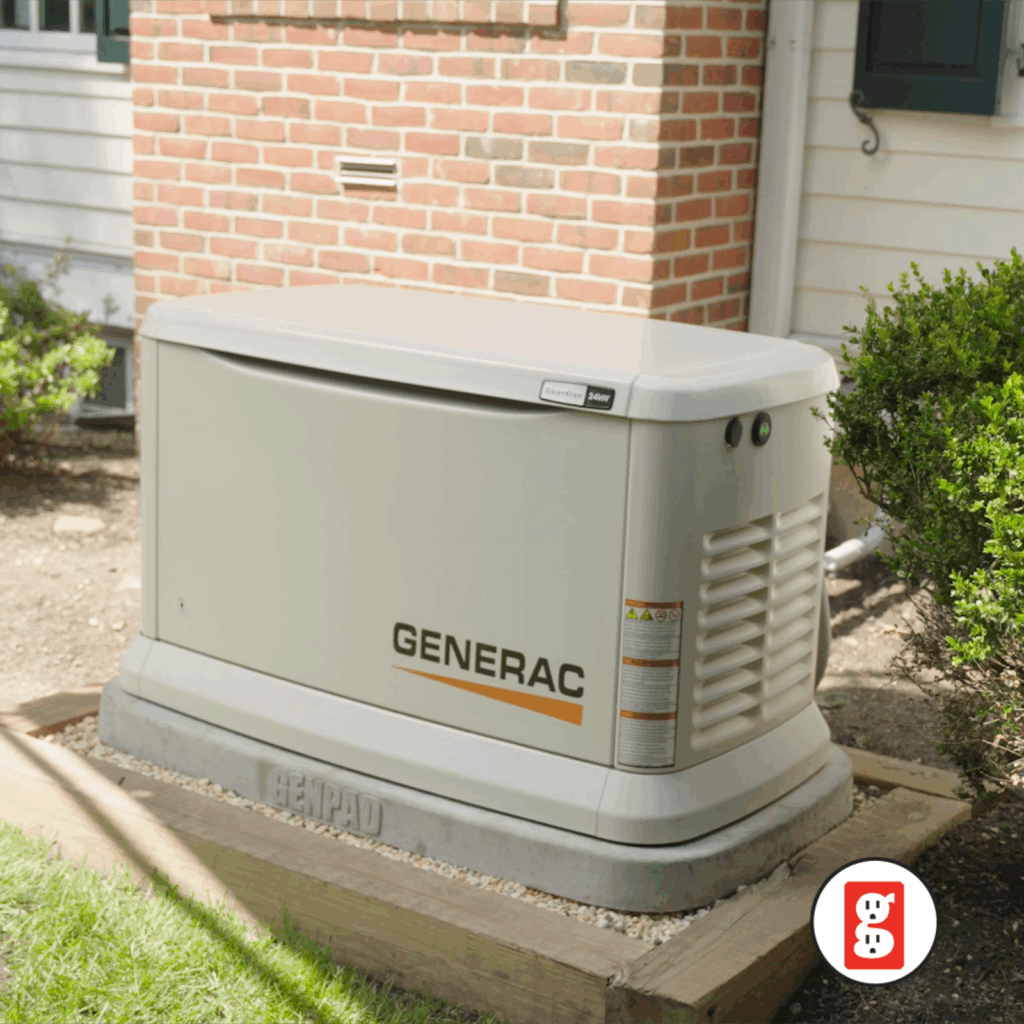
One common mistake is assuming that every expensive home upgrade comes with a tax benefit. That is not how the rules work. A generator may still be a strong investment for safety and reliability even when it does not create a deduction or credit.
Another mistake is mixing up a tax deduction and a tax credit. They are not the same. A credit reduces tax owed, while a deduction reduces taxable income. For a standard personal-use standby generator, most homeowners are usually dealing with neither.
Should Tax Treatment Decide Whether You Buy One?
Usually, no. The better question is whether backup power makes sense for your home, your risk level, and your outage history. Tax treatment can be reviewed afterward, but it should not be the main reason to buy a generator.
If you are exploring backup power options, you can start by looking at a whole house generator, comparing home standby generator models, or reviewing generator installation.
Conclusion
A whole house generator is usually not tax deductible when it is installed for standard personal residential use. The narrow exceptions tend to involve medical necessity, a properly qualifying business-use situation, or a different clean-energy setup governed by separate rules. Even in those cases, the details matter.
The safest way to handle this question is simple: choose the right backup power setup for your home first, then ask a qualified tax professional whether any part of the cost may be treated differently on your return. For homeowners exploring backup power options, Generator Supercenter of Broward is a helpful place to start.